

University of Basra Hosts a Symposium on Salt Domes in the Arabian Gulf
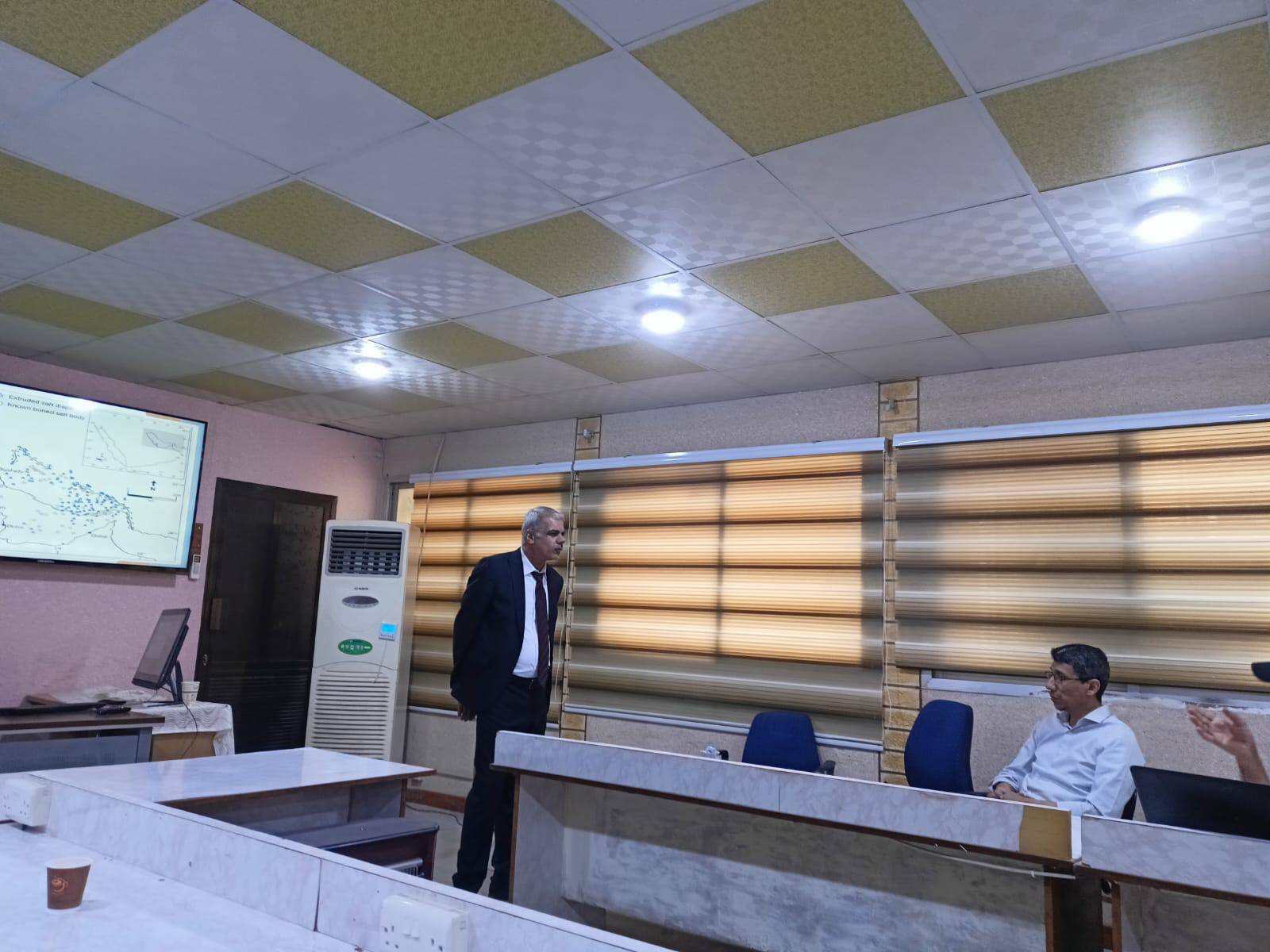
The Marine Sciences Center at the University of Basra organized a symposium titled “Geochemistry of Rock Outcrops of Salt Domes Resulting from Salt Intrusions in the Arabian Gulf: The Jabal Sanam Dome in Southern Iraq as a Case Study.”
The panel aimed to highlight the geochemical and geological characteristics of salt domes, with a focus on their role in understanding the regional geological system.
The first session, presented by Dr. Nael Abdel-Imam Karim Al-Najari from the College of Sciences, focused on the widespread distribution of salt domes in the Arabian Gulf region, explaining that they constitute a major geological phenomenon extending from Iran in the east to Oman, Kuwait, and Saudi Arabia in the west. The researcher noted that these domes, which form most of the Arabian Gulf islands such as Abu Musa and Dalmah , emerge from a pre-Late Cambrian evaporitic complex, where these salt masses surged from great depths to penetrate the sedimentary layers and emerge on the surface. The second focus centers on the Jabal Sanam dome, a case study of this phenomenon in southern Iraq, as a natural and structural extension of the Arabian Gulf dome system. It is the only surface outcrop of the Hormuz Series rocks in Iraq and a rare counterpart to the domes found in the Sultanate of Oman, making it a natural laboratory for studying this ancient series Jabal Sanam shares with the region’s domes the nature of cyclic sedimentation, consisting of rock sequences including dolomite, gypsum, and halite, which underwent structural deformations due to immense pressure during the uplift process. Regarding the geochemical analysis of these rocks and understanding their origin, the author reviewed laboratory results that identified the chemical and mineral elements that confirm the affiliation of Jabal Sanam’s rocks to the complex evaporite environment of Hormuz and the use of geochemical indicators to determine the thermal and pressure conditions the rocks underwent during their ascent from the depths by relying on the study of the chemical composition of rock outcrop samples from Jabal Sanam .
Important News


viewed most
.jpg)

.png)