

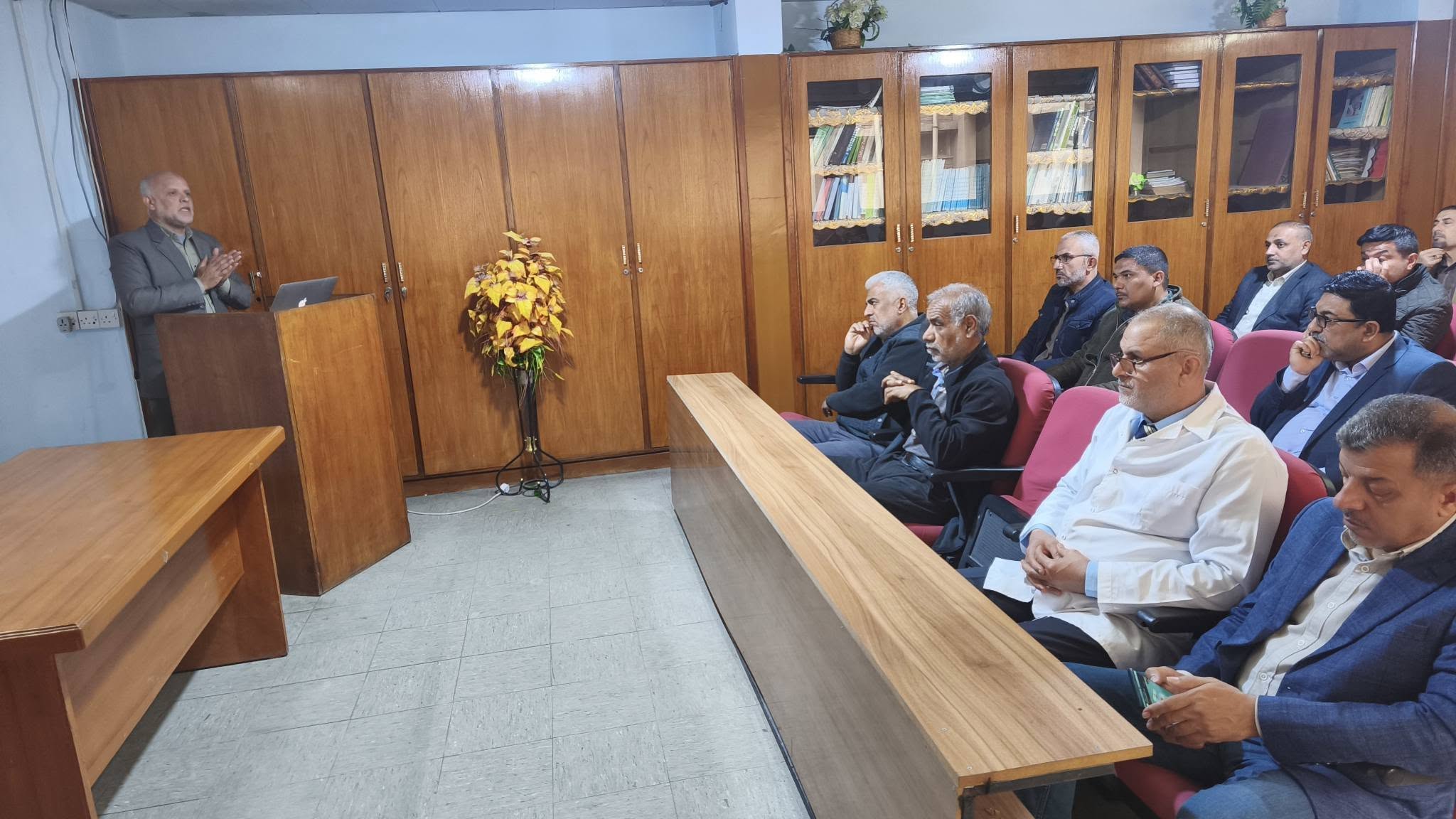
The Marine Science Center at the University of Basra organized a course entitled “The Environmental Impact of Grey Mangrove Cultivation on the Iraqi Coast.”
The course aimed to explain the restoration of the mangrove swamp ecosystem on the southern coast of Iraq (Basra Governorate) to combat the effects of climate change and create sustainable sources of income.
The course, lectured by Dr. Jihad Makki Al-Zawar, included a detailed explanation of the environmental impact of mangrove cultivation. Mangrove forests act as “carbon sinks” by storing huge amounts of carbon in their soil and roots, which reduces greenhouse gases. They also protect the coastline, as the complex roots of mangroves absorb wave energy, reducing coastal erosion and protecting residential areas from flooding and severe storms. They also promote biodiversity, providing a breeding ground and shelter for many marine creatures and birds, including endangered species (such as sea turtles). They improve water quality through their roots, which act as natural filters that trap sediment and silt and remove excess nutrients that can cause harmful algae blooms. By purifying the water, mangrove trees contribute to the health of nearby coral reefs and seagrass beds.
Media and Government Communications Department
Important News


viewed most
.jpg)
.png)