
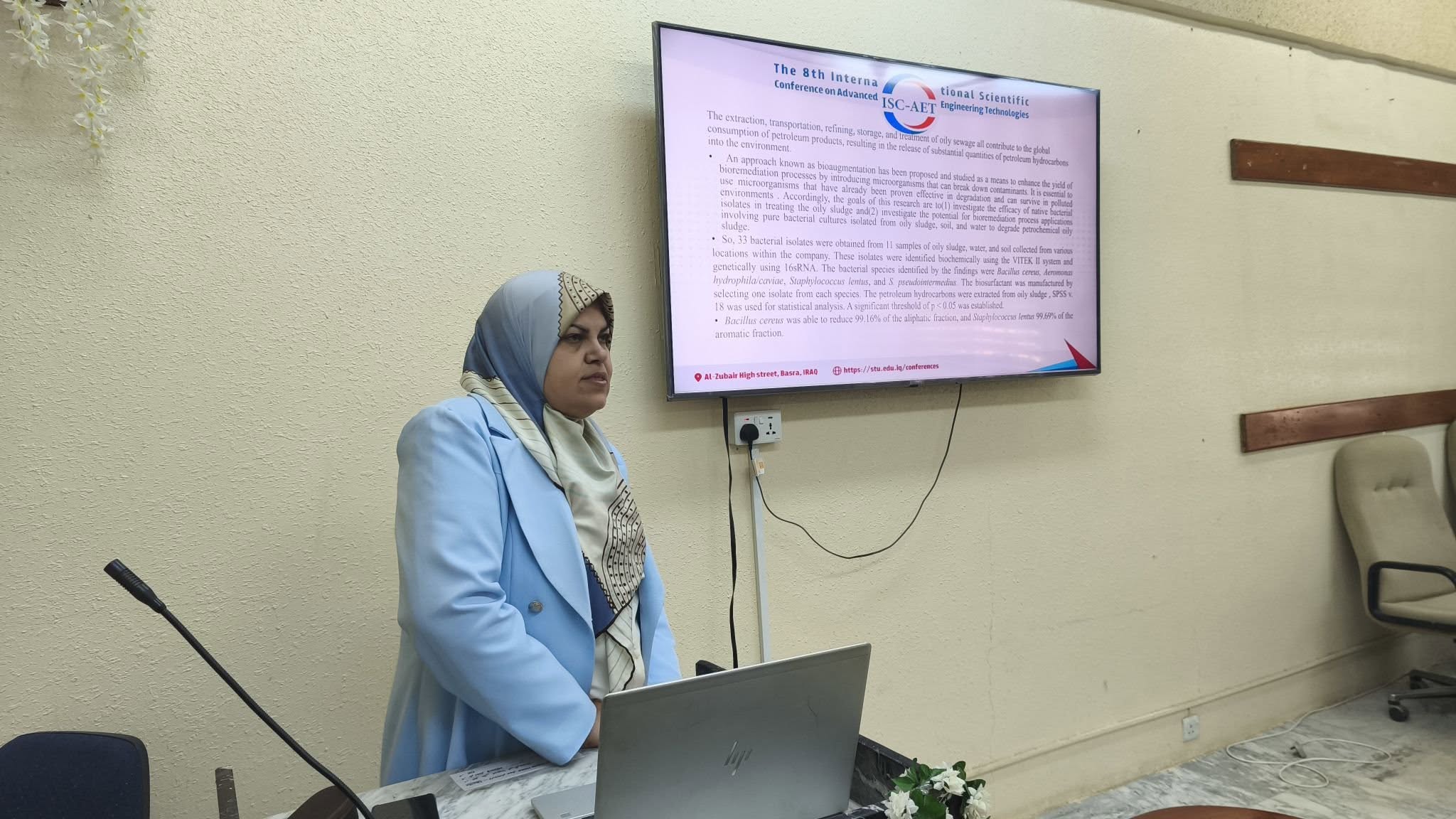
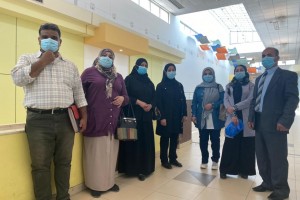
The Marine Science Center at the University of Basra organized a course entitled “Bacterial Degradation of Aliphatic and Aromatic Hydrocarbons in Oil Waste.”
The course aimed to build and develop the trainees' capabilities in the field of utilizing biotechnology to combat pollution caused by oil waste and residues, which pose a significant environmental hazard.
The course, which was taught by Professor Iman Abdullah Al-Amara, Assistant Professor Balqis Suhaim Abbas, and Assistant Professor Dhafar Zahir Habib, included an explanation of the mechanism used by bacteria isolated from environments contaminated with hydrocarbon residues to analyze and break down complex petroleum compounds, especially aliphatic hydrocarbons, which are straight-chain or branched compounds, in addition to aromatic hydrocarbons: cyclic compounds (such as benzene and toluene), which are more difficult to decompose and more toxic, for the purpose of utilizing them by bacteria as a source of carbon and energy necessary for their growth by converting them into compounds that are less toxic to the environment.
The course focused on the importance of this technology, which falls within the scope of sustainable development technologies as an environmentally friendly (green), promising, and cost-effective solution for oil spill disposal and contaminated soil and water treatment, compared to traditional chemical or physical methods that may be less efficient or have harmful side effects.
Marine Science Center Media
Important News

viewed most
.jpg)
.png)