

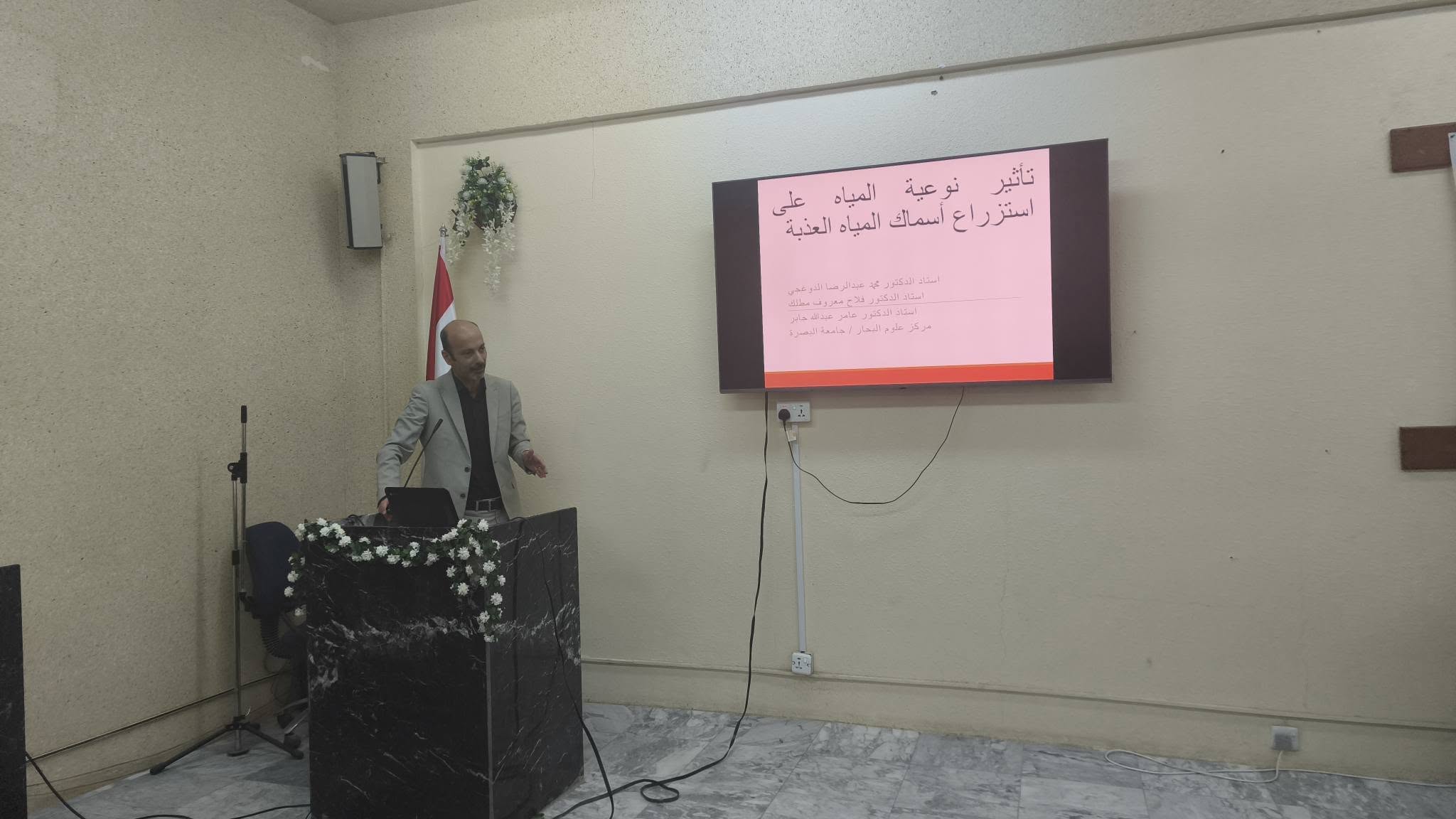
The Marine Sciences Center at the University of Basra organized a scientific lecture titled “The Impact of Water Quality on Freshwater Fish Farming.”
The lecture aimed to highlight the direct relationship between the physical and chemical properties of water and the success of aquaculture projects.
The lecture, presented by Dr. Muhammad Abdul-Razzaq Jassim, Dr. Falah Ma’ruf Mutlak, and Dr. Amer Abdullah Jaber, covered several key topics. It began by reviewing the concept of water quality and its importance as the backbone of any fish farming project, since water is the medium in which fish live. It also introduced attendees to the natural properties of freshwater and how any imbalance in its components negatively affects fish health and growth rates.
They also highlighted the physical parameters of water and their effects:
temperature, which controls metabolic processes, growth, and reproduction;
and transparency and color, which reflect phytoplankton density and the availability of natural food.
In addition to the chemical parameters (biological indicators). This section is the most important, as it focuses on precise measurements that determine water quality: dissolved oxygen, pH, and nitrogen compounds (ammonia, nitrite, nitrate), which pose a significant risk. The lecture explains their sources (waste and feed residues) and their toxic effects on fish, while specifying safe limits for each. It also highlighted the relationship between electrical conductivity and salinity
and addressed water sources, their management, and their use in aquaculture.
The course covers the types of water sources used in aquaculture:
At the conclusion of the lecture, a connection was made between water quality and economic viability, as high-quality water leads to better feed conversion and faster fish growth
Important News


viewed most
.jpg)

.png)