

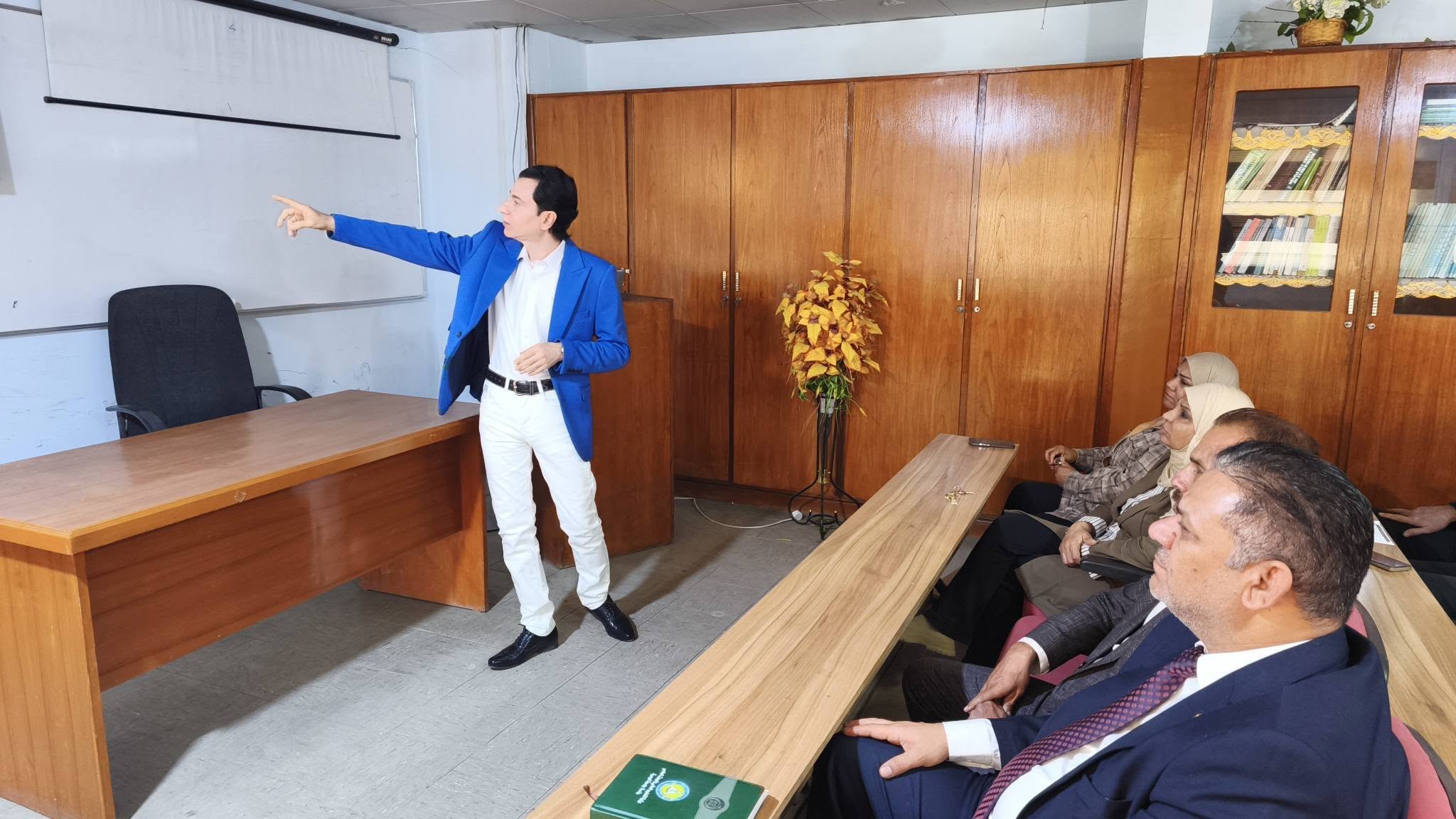
The Marine Sciences Center at the University of Basra organized a training course titled “The Role of Genetically Modified Enzymes in Sustainable Environmental Applications.”
The course aimed to bridge the gap between modern biotechnology and environmental science, with the goal of finding practical and effective solutions to save our planet from pollution while creating new economic opportunities.
The course, presented by Dr. Rafid Mohammed Karim and a number of researchers, covered the role of genetically modified enzymes in sustainable environmental applications, focusing on how to integrate advanced biotechnologies with sustainability goals. It included the fundamentals of enzyme engineering: genetic modification techniques (such as CRISPR and Directed Evolution) to increase enzyme efficiency and stability under harsh conditions; the use of enzymes to break down organic pollutants, heavy metals, and toxins in soil and water; the role of engineered enzymes (such as PETase) in breaking down plastics and converting them into recyclable feedstocks; renewable energy production; and the optimization of “cellulase” enzymes to convert agricultural waste into biofuels with high efficiency; and replacing harmful traditional chemical processes in the paper, textile, and detergent industries with environmentally friendly enzymatic alternatives, along with a statement on the biosafety assessment of modified enzymes and the regulations governing their use in the open environment.
Department of Media and Government Communications
Important News


viewed most
.jpg)
.png)